Yichang Meeting Highlights MVR-MBR ZLD Validation




From June 25 to 27, 2026, a major domestic water industry conference in Yichang brought practical attention to a ZLD route that couples MVR evaporators with submerged and tubular MBRs for water sources carrying high ammonia nitrogen and high organic loads. For equipment makers, EPC contractors, project bidders, and overseas buyers tracking new water plant procurement, the development is worth watching because it links technical validation with two immediate commercial signals: low-energy operation and anti-biofouling membrane selection are moving closer to procurement priorities, and Chinese EPC firms have already started packaging related equipment for export.
What the Yichang conference put on the table
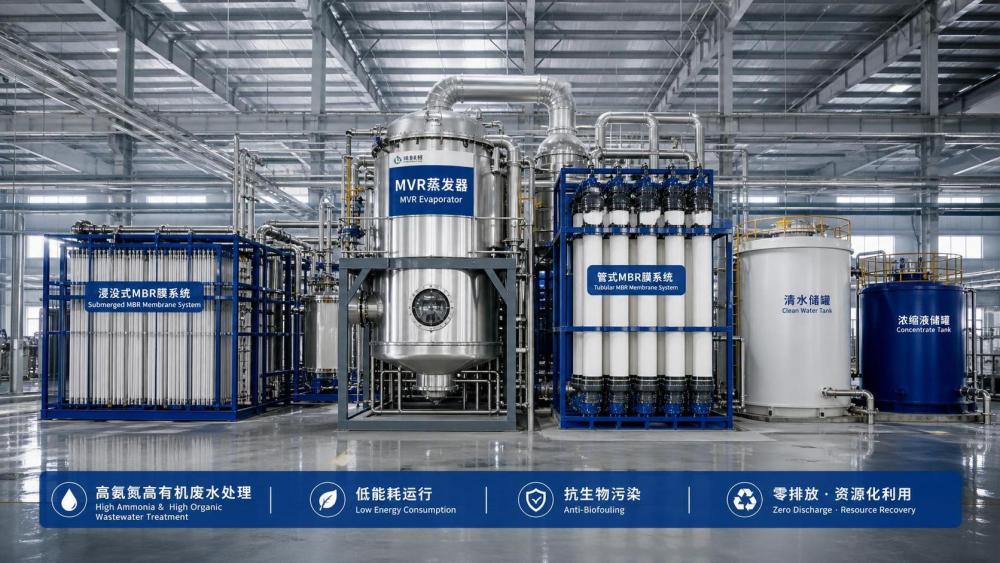
The conference, held in Yichang between June 25 and 27, 2026, focused on engineering cases using MVR evaporators combined with submerged and tubular MBRs in ZLD applications for source water with elevated ammonia nitrogen and organic loading. The event highlighted practical proof around this process configuration rather than a purely conceptual discussion. It also emphasized two technical points within those cases: achieving lower-energy operation and selecting membrane modules with stronger resistance to biofouling.
The confirmed market context is equally notable. This process route is being listed as a tender priority by buyers of new water plants in Southeast Asia and the Middle East. At the same time, Chinese EPC companies have begun packaging related equipment export solutions around this technical pathway.
Why different market participants may pay attention
For plant buyers, procurement criteria may become more process-specific
From an industry perspective, buyers involved in new water plant tenders may be affected because the information points to a more explicit preference for a defined ZLD configuration rather than a broad interest in advanced treatment alone. The likely impact is on bid specifications, technical scoring, and supplier comparison, especially where energy use and membrane anti-biofouling performance are being weighed together.
For membrane and evaporation equipment suppliers, component matching becomes more visible
Analysis shows that suppliers of MVR equipment and submerged or tubular MBR modules may face closer scrutiny on how their products work as an integrated package. The relevant business link is no longer only standalone equipment supply; it also extends to compatibility, operating logic, and the ability to address high ammonia nitrogen and high organic load conditions within a ZLD framework.
For EPC contractors, export packaging may shift from product delivery to solution delivery
Observably, Chinese EPC companies are already moving toward bundled export offerings. That can affect proposal design, subcontractor coordination, and client communication, because overseas projects may increasingly expect a process-led package rather than separately sourced equipment. What deserves closer attention is whether EPC teams can present a coherent technical route centered on operating efficiency and membrane selection.
For service and supply-chain participants, documentation and delivery alignment may matter more
Service providers supporting bidding, compliance, logistics, and after-sales preparation may also be affected. If overseas tenders give priority to this route, supporting documents, technical descriptions, and delivery planning may need to reflect not just product availability but the logic of the coupled process and its operating focus.
What companies should watch next in practice
Track how tender language describes the process route
Analysis shows that companies should closely monitor whether future tender documents in Southeast Asia and the Middle East continue to reference this coupled MVR-MBR ZLD path in specific terms. The difference between a general preference and a clearly written bid requirement will shape sales strategy, solution design, and qualification preparation.
Prepare technical communication around energy use and biofouling control
What deserves closer attention is the pairing of low-energy operation with anti-biofouling membrane selection. Companies involved in bidding or pre-sales may need to organize their technical narratives around these two points together, since the event summary indicates they are being presented as linked decision factors rather than separate product features.
Check whether export packages are complete enough for project review
For EPC firms and supporting manufacturers, practical attention should go to how equipment export packages are structured. This includes whether the package clearly explains the role of MVR, the role of submerged or tubular MBRs, and how the overall ZLD route is positioned for source water with high ammonia nitrogen and high organic loads. The issue here is not broad management readiness, but whether the package matches the way overseas buyers may evaluate the solution.
Differentiate technical validation from immediate market conversion
Observably, the conference spotlight and export packaging activity do not by themselves confirm broad project conversion. Companies should separate demonstrated engineering direction from finalized order outcomes, and avoid treating current attention as a completed market shift.
How this signal is best interpreted now
Analysis shows that this development is more meaningful as a commercializing technical signal than as proof of a fully settled market pattern. The conference focus suggests that MVR and submerged or tubular MBR coupling in ZLD is moving from technical discussion toward bid-facing validation, especially for challenging source water conditions. At the same time, the available facts do not establish how widely or how quickly this preference will translate into awarded projects.
It is more appropriate to understand this as a near- to mid-term industry signal that deserves continued observation. The reason is that the same update contains both engineering emphasis and procurement relevance: the process route is being highlighted in project cases, and overseas buyers are already treating it as a tender priority. That combination matters, but it still requires follow-up verification through subsequent procurement practice.
What this update suggests for the sector
At this stage, the Yichang meeting is best read as a sign that process integration, not single-unit promotion, is gaining importance in water treatment discussions tied to ZLD. For companies across equipment, EPC, and project support functions, the immediate takeaway is not that the market has reached a fixed conclusion, but that buyer attention is becoming more specific around energy performance, membrane resilience, and packaged delivery capability.
A neutral reading is that the update carries both short-term relevance and longer-term implications. In the short term, it may influence how bids, technical materials, and export packages are prepared. In the longer term, it may indicate where future project specifications are heading, but that direction still needs continued market observation rather than assumption.
About the basis of this article
This article is generated based on the user-provided news title, event date, and event summary related to the 13th Drinking Water Safety Assurance Exchange Meeting and its focus on validated MVR-MBR coupled ZLD applications. For this type of industry update, commonly relevant source categories may include official conference releases, company announcements, industry association updates, authoritative media reporting, and standard-setting documents.
No specific official source link was provided in the input, so the exact source trail still requires ongoing verification. Follow-up attention should remain on whether later official statements, tender documents, procurement notices, or project disclosures further clarify how this process route is being adopted in actual overseas water plant projects.
Related News
- Can a flatsheet MBR reduce fouling in high-load wastewater applications?Sep 20, 2026Microbial Fluidics Scientist
- Where Membrane Bioreactor Applications in Industrial Reuse Deliver the Best Water RecoveryAug 03, 2026Microbial Fluidics Scientist
- Submerged MBR vs Conventional MBR: Key Selection FactorsJul 17, 2026Microbial Fluidics Scientist
- 2026 Membrane Bioreactor Trends: Capacity, Energy Use, and Retrofit DemandJul 15, 2026Microbial Fluidics Scientist
Related News
- 00
0000-00
How to verify industrial discharge compliance requirements before a permit renewal - 00
0000-00
How seawater salinity shapes desalination engineering in Saudi Arabia - 00
0000-00
How to compare water treatment EPC contractors by lifecycle cost - 00
0000-00
When does industrial wastewater reclamation for reuse justify its cost? - 00
0000-00
When turbocharger energy recovery technology reduces MVR power demand
Weekly Insights
Stay ahead with our curated technology reports delivered every Monday.