
When Centrifugal Sludge Dewatering Delivers Lower Disposal Costs




When Centrifugal Sludge Dewatering Delivers Lower Disposal Costs
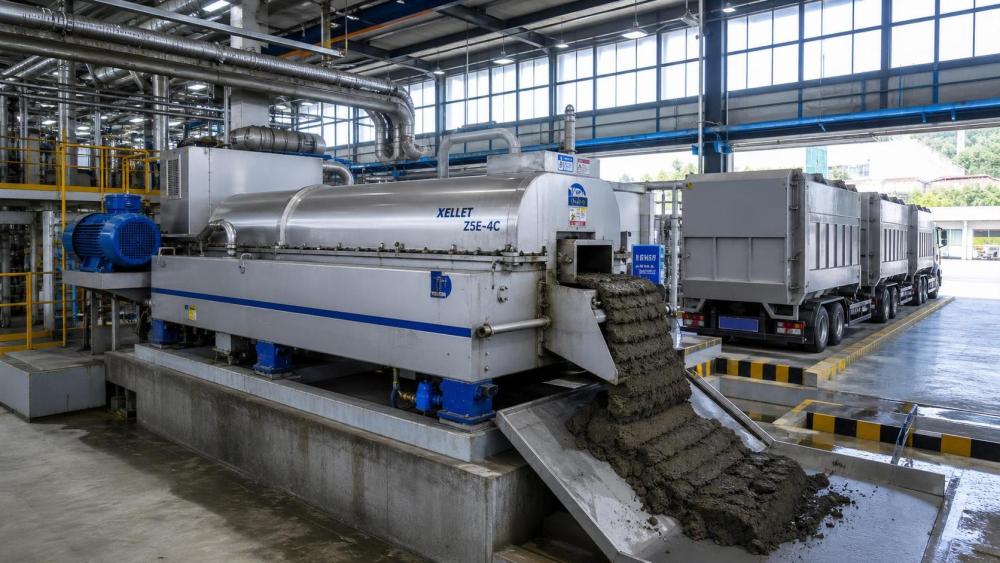
For financial decision-makers, centrifugal sludge dewatering is not just a process upgrade. It is a direct lever on disposal spending, transport volume, and long-term operating costs.
When sludge leaves the plant drier and more stable, every downstream cost line starts to move. Hauling drops, landfill charges fall, and compliance becomes easier to budget.
That is why centrifugal sludge dewatering often matters more in the finance office than in the equipment room. The economics are visible, recurring, and measurable.
In practical terms, the question is simple. Can a decanter centrifuge reduce total sludge handling cost enough to justify the capital and operating expense?
In many industrial and municipal settings, the answer is yes. The value comes from lower wet volume, fewer truckloads, and tighter process control.
Why disposal costs keep rising
Disposal is no longer a back-end utility expense. It has become a volatile operating cost shaped by transport rates, landfill gate fees, fuel, labor, and compliance pressure.
More plants now face tighter discharge permits and closer reporting requirements. That raises the cost of getting sludge wrong, even before penalties enter the picture.
From a budget perspective, wet sludge is expensive sludge. Water adds mass, increases hauling frequency, and inflates unit disposal costs without adding value.
This is where centrifugal sludge dewatering becomes attractive. It targets the most avoidable cost driver in the chain: moving and paying to dispose of excess water.
How centrifugal sludge dewatering changes the cost structure
Centrifugal sludge dewatering separates solids from liquid using high rotational force. In sludge applications, decanter centrifuges continuously thicken and dewater solids in one controlled process.
The financial impact starts with cake dryness. Even a modest increase in dry solids can translate into a meaningful reduction in annual disposal volume.
A plant shipping 10,000 tons of wet sludge per year may cut hundreds or thousands of tons after process improvement. The exact number depends on feed solids and achieved dryness.
That reduction affects several cost buckets at once:
- Lower hauling frequency
- Lower disposal or landfill fees
- Lower storage and handling burden
- Lower spill and odor management risk
- More predictable monthly waste budgets
In other words, centrifugal sludge dewatering does not save money in one narrow place. It reshapes the economics of the whole sludge chain.
Where the savings usually show up first
The fastest visible savings usually come from transport. If sludge cake is drier, trucks carry more solids and less water.
That means fewer trips, lower fuel exposure, and less coordination with third-party haulers. In remote industrial sites, this alone can materially improve project economics.
The second savings area is disposal pricing. Many sites pay by weight or volume, so improved dewatering directly reduces invoice value.
A third benefit is operational stability. Continuous centrifugal sludge dewatering often reduces bottlenecks in sludge storage, loading, and emergency handling.
That stability matters because irregular sludge management usually creates hidden costs. Overtime, contractor callouts, and permit-driven rush decisions rarely appear attractive in annual reviews.
A simple cost logic
If disposal cost per ton is high, every percentage point of solids increase becomes valuable. If trucking distance is long, that value rises even faster.
This is why centrifugal sludge dewatering often performs well in mining, chemicals, food processing, pulp, power, and municipal wastewater applications.
What financial reviewers should examine before purchase
The best procurement decisions compare total cost, not just equipment price. A low bid can become an expensive asset if dryness, uptime, or polymer efficiency fall short.
A structured review should focus on the operating model behind centrifugal sludge dewatering, not on brochure claims alone.
Key evaluation points
- Expected cake dryness across actual sludge conditions, not ideal lab samples.
- Polymer consumption per ton of dry solids.
- Power use per cubic meter or per ton processed.
- Wear protection for abrasive or variable feed.
- Maintenance intervals, spare parts cost, and service access.
- Automation level and operator skill required.
- Vendor performance guarantees and case references.
In real procurement cycles, these factors shape payback more than nameplate capacity. The cheapest machine is rarely the lowest-cost system over five years.
Common ROI mistakes in centrifugal sludge dewatering projects
One common mistake is using average sludge data only. Sludge behavior changes with season, upstream chemistry, production loads, and biological process stability.
Another mistake is ignoring polymer cost sensitivity. An efficient centrifuge with poor polymer performance can erode projected savings surprisingly quickly.
A third mistake is excluding downtime risk. If centrifugal sludge dewatering stops, disposal cost can spike through storage overflow, emergency transport, or unplanned outsourcing.
There is also a reporting mistake. Many business cases count only disposal savings and miss secondary gains from labor reduction, better compliance, and lower site congestion.
A more realistic ROI model includes
- Capital cost
- Installation and integration cost
- Energy and polymer cost
- Labor and maintenance cost
- Hauling and disposal cost reduction
- Risk-adjusted uptime assumptions
- Residual value and asset life
Questions to ask suppliers before approval
Supplier discussions should move beyond generic efficiency claims. Good centrifugal sludge dewatering procurement depends on asking commercially useful questions.
These questions help separate headline pricing from delivered value. They also make centrifugal sludge dewatering proposals easier to compare on a like-for-like basis.
When centrifugal sludge dewatering makes the strongest business case
The strongest cases usually share a few conditions. Disposal cost is high, hauling distance is significant, sludge volumes are stable enough to justify continuous operation, and compliance pressure is rising.
Sites with limited space also benefit. Centrifugal sludge dewatering is compact relative to some alternative systems, which can reduce civil work and simplify retrofits.
The case becomes even stronger when sludge generation is expected to grow. In that situation, avoiding future transport and disposal inflation matters as much as current savings.
This also aligns with broader ESG and compliance goals. Lower waste volume, cleaner handling, and better process control support a lower-risk operating profile.
Final decision framework
A sound approval decision starts with one baseline question. What is the current all-in cost of sludge, from thickening to final disposal?
Then compare that baseline with a realistic centrifugal sludge dewatering scenario. Use site-specific solids data, hauling contracts, energy pricing, and polymer assumptions.
The goal is not to buy the most advanced machine on paper. The goal is to secure lower disposal cost with acceptable operating risk and dependable service support.
When evaluated this way, centrifugal sludge dewatering becomes easier to justify. It is a cost-control asset, a compliance support tool, and often a practical route to better lifecycle economics.
The most useful next step is a vendor-backed cost model using actual sludge samples and local disposal rates. That is where theoretical savings turn into a bankable procurement decision.
Related News
- Centrifuge vs. Filter Press: Which Handles High-Volume Sludge More Efficiently?Oct 10, 2026Centrifugal Dynamics Strategist
- When does centrifugal sludge dewatering outperform a filter press?Aug 25, 2026Centrifugal Dynamics Strategist
- When Centrifugal Sludge Dewatering Delivers Lower Disposal CostsJul 14, 2026Centrifugal Dynamics Strategist
- Centrifugal Separation of Lithium Brine: Key Metrics for Process SelectionJul 12, 2026Centrifugal Dynamics Strategist
Related News
- 00
0000-00
When does aeration scouring prevent membrane fouling in MBR systems? - 00
0000-00
How energy recovery devices reduce seawater desalination plant operating costs - 00
0000-00
How to evaluate a desalination technology company’s SWRO project experience - 00
0000-00
When low temperature MVR evaporators reduce energy use in heat-sensitive wastewater - 00
0000-00
When is a vertical filter press the right choice for sludge dewatering?
Weekly Insights
Stay ahead with our curated technology reports delivered every Monday.