China Customs Tightens SWRO Export Checks




On July 13, 2026, China Customs began a new export control action under the "Green Export" supervision program targeting containerized seawater reverse osmosis plants. The change matters because it turns several technical and documentary items into immediate pre-shipment inspection points, including high-pressure pump energy-efficiency labeling under GB/T 3216-2025, verified energy recovery performance of at least 98%, and compliance proof for anti-biofouling coatings under ISO 20340:2023. For exporters, manufacturers, inspection-related service providers, and overseas buyers relying on delivery schedules, this is not just a procedural update but a practical change affecting compliance review, port release timing, and order execution.
What the July 13 inspection action confirms
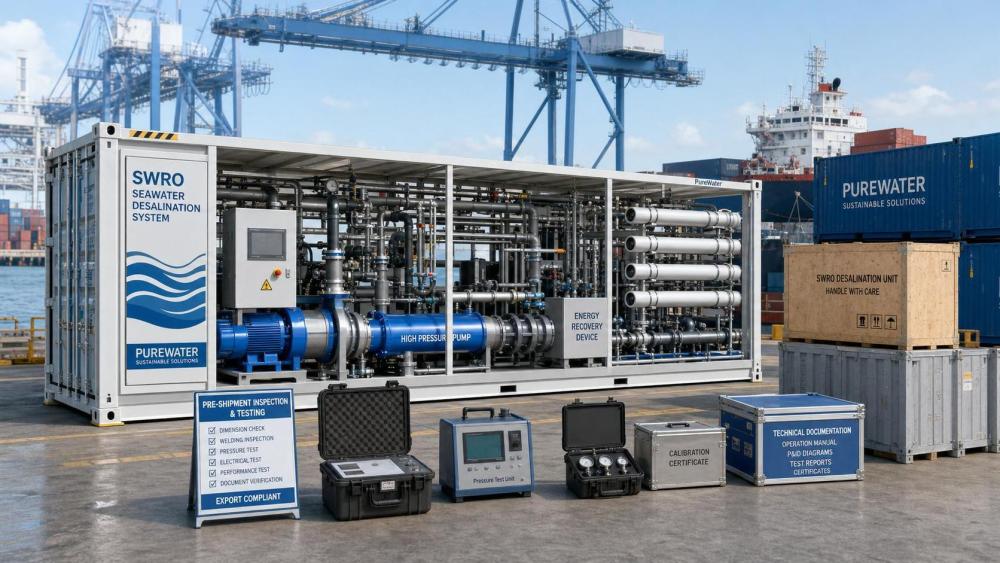
According to the provided event summary, China Customs launched the "Green Export" special supervision action on July 13, 2026 and applied full pre-export inspection to containerized SWRO plants. The inspection focus includes three confirmed items: energy-efficiency labeling for high-pressure pumps under GB/T 3216-2025, measured recovery performance of energy recovery devices at no less than 98%, and compliance documentation for anti-biofouling coatings under ISO 20340:2023.
The first round of spot checks covers the ports of Shenzhen, Qingdao, and Xiamen. The provided information also states that average delivery schedules have been extended by 7 to 10 working days, affecting delivery commitments for orders bound for the Middle East and Southeast Asia.
Where the pressure is likely to appear first
Export shipment planning now faces a tighter release window
From an industry perspective, exporters of containerized SWRO plants are likely to feel the impact first because the new checks sit directly before shipment. The practical exposure is in document readiness, technical consistency between equipment configuration and submitted materials, and the ability to support inspection at port without delaying dispatch further. What deserves closer attention is whether existing export schedules and customer commitments already assumed immediate release after cargo arrival at port.
Equipment assembly and final acceptance may need closer file alignment
Manufacturing and integration teams may be affected where final assembled systems include high-pressure pumps, energy recovery devices, and coating-related materials that now face more explicit scrutiny. Analysis shows that the operational issue is not only whether components are installed, but whether labeling, measured performance records, and compliance proof can be presented in a form that supports inspection without contradiction or omission.
Testing and compliance support functions become more visible
Certification-related firms, testing service providers, and internal compliance teams may also see increased pressure because the inspection focus refers to specific standards and measured performance. Their role is likely to matter most in preparing traceable reports, technical documents, and supporting files that can be reviewed during export inspection. For buyers and procurement teams, the change may affect delivery certainty more directly than product selection itself, especially where contracts are linked to fixed shipping milestones.
What companies should review now
Check whether technical files match the inspection points
Analysis shows that companies handling containerized SWRO exports should first review whether technical documentation clearly covers the three named inspection areas: GB/T 3216-2025 energy-efficiency labeling for high-pressure pumps, measured energy recovery performance at or above 98%, and ISO 20340:2023 compliance proof for anti-biofouling coatings. The key issue is document completeness and internal consistency rather than broad policy interpretation.
Reassess delivery promises tied to the three named ports
Because the first round of checks covers Shenzhen, Qingdao, and Xiamen, shipment planning linked to those ports deserves immediate attention. Observably, the reported 7 to 10 working day extension means exporters, freight coordinators, and overseas buyers may need to revisit contractual delivery buffers, cargo handover timing, and communications around committed shipment dates for Middle East and Southeast Asia orders.
Watch for changes in tender, procurement, and acceptance language
What deserves closer attention is whether market participants begin reflecting these inspection points in procurement specifications, acceptance checklists, or bid documentation. The provided information does not confirm such downstream changes yet, so this should be treated as a monitoring point rather than an established outcome.
Keep following how enforcement language is applied in practice
The current information confirms the inspection focus and initial port coverage, but it does not provide detailed enforcement wording for every practical scenario. For that reason, exporters and supply chain teams should continue tracking how customs review is described in later official statements, how compliance evidence is requested in practice, and whether the initial approach remains concentrated on the named ports or develops further.
How this should be read at this stage
Observably, this development is more than a general policy signal because it is tied to a start date, named inspection items, identified ports, and a reported effect on delivery lead time. At the same time, it is still too early to treat every downstream market consequence as settled. It is more appropriate to understand this as an implemented enforcement signal with immediate operational consequences, while the full execution rhythm and market response still require continued observation.
The immediate takeaway for the SWRO export chain
The main industry significance of this event is that export compliance for containerized SWRO plants is being tested at the shipment gate through specific technical and documentary checkpoints. For affected companies, the near-term issue is less about broad policy interpretation and more about whether product files, inspection evidence, and delivery planning are ready for a stricter release process. Current conditions are best understood as a live compliance and execution change rather than a background policy announcement.
Basis of this article and what still needs verification
This article is generated from the user-provided news title, event date, and event summary. For events of this type, commonly relevant source categories may include official notices, releases from regulatory authorities, customs or trade administration updates, industry association materials, standards organization documents, and reporting by established trade media.
No specific official source link was provided in the input, so the exact official publication path still needs to be verified on an ongoing basis. Observably, the areas that still require follow-up include detailed enforcement language, compliance interpretation for certification and testing materials, possible changes in tender or procurement documents, market feedback from affected export routes, and how companies are implementing the new inspection requirements in practice.
Related News
- How energy recovery devices reduce seawater desalination plant operating costsOct 11, 2026Osmotic Pressure & Membrane Architect
- How to evaluate a desalination technology company’s SWRO project experienceOct 10, 2026Osmotic Pressure & Membrane Architect
- When containerized desalination makes sense for island water supplySep 24, 2026Osmotic Pressure & Membrane Architect
- What to verify before choosing a seawater RO technology supplierSep 11, 2026Osmotic Pressure & Membrane Architect
Related News
- 00
0000-00
When does aeration scouring prevent membrane fouling in MBR systems? - 00
0000-00
How energy recovery devices reduce seawater desalination plant operating costs - 00
0000-00
How to evaluate a desalination technology company’s SWRO project experience - 00
0000-00
When low temperature MVR evaporators reduce energy use in heat-sensitive wastewater - 00
0000-00
When is a vertical filter press the right choice for sludge dewatering?
Weekly Insights
Stay ahead with our curated technology reports delivered every Monday.